Dental Implants vs. Bone Grafting: Rebuilding Your Jaw Foundation in Kelowna
Dental Implants vs. Bone Grafting: Rebuilding Your Jaw Foundation in Kelowna
Dental Implants vs. Bone Grafting: Rebuilding Your Jaw Foundation in Kelowna

Understanding the Interconnected Roles of Bone Augmentation and Implant Placement for Long-Term Oral Restoration in the Okanagan Valley
1. Navigating Structural Jaw Restoration and Implantology
When evaluating options for replacing missing teeth, patients often encounter two distinct clinical terms: dental implants and bone grafting. A common misconception is that these procedures are competing treatments. In clinical reality, they represent sequential or complementary phases of comprehensive jaw reconstruction.
A dental implant serves as a biomorphic replacement for a natural tooth root. However, an implant cannot function predictably without adequate density, height, and width of the supporting alveolar bone. When a natural tooth is extracted or lost to periodontal disease, the underlying bone begins a natural process of deterioration known as resorption.
For patients seeking long-term tooth replacement via dental implants and bone grafting in Kelowna, our specialists evaluate whether the existing jaw structure can anchor a titanium post directly or whether preliminary foundation building is required.
Structural Sequencing Protocol
Phase 1: Bone Grafting — Rebuilding bone height, width, and volume at the target site.
Phase 2: Healing & Integration — Allowing the graft material to mature and integrate with natural living bone.
Phase 3: Dental Implant Placement — Inserting the bio-inert titanium implant post into the reinforced bone foundation.
Phase 4: Final Restoration — Attaching a custom crown, bridge, or fixed denture once osseointegration is complete.
2. The Biological Reality of Jawbone Resorption After Tooth Loss
The maxilla (upper jaw) and mandible (lower jaw) rely on continuous mechanical stimulation from natural tooth roots to maintain their mass and cellular density. Every time you chew or bite, forces are transmitted through the periodontal ligament and tooth root into the surrounding alveolar bone. This micro-stimulation signals the body to continue sending calcium and vital nutrients to maintain bone integrity.
The Timeline of Alveolar Bone Atrophy
When a tooth is lost or extracted, this natural stimulation ceases entirely. The body recognizes the lack of functional demand and begins reabsorbing the unneeded mineral structure:
First 3 to 6 Months: The socket undergoes rapid architectural changes. Up to 40% to 60% of the alveolar ridge width can be lost within the first year following extraction.
12 Months and Beyond: Bone height begins to diminish significantly alongside width. The ridge becomes narrow, knife-edged, and structurally insufficient to support a standard root-form implant.
Long-Term Impact: Unaddressed bone loss can alter facial aesthetics, causing a prematurely aged appearance characterized by sunken cheeks, a shortened lower face height, and thin lips.
Understanding jawbone loss after tooth extraction highlights why immediate evaluation by a qualified oral surgery team is vital. Delaying treatment often transforms a straightforward single-stage implant placement into a multi-phase reconstructive procedure.
3. Bone Grafting Materials and Advanced Sinus Lift Techniques
When structural deficiencies exist, bone grafting acts as a biological scaffold. The process, known clinically as guided bone regeneration (GBR), encourages your body’s natural osteoblasts (bone-building cells) to migrate into the deficient zone and generate new, living bone tissue.
Types of Bone Grafting Materials
Depending on the extent of the defect and the anatomical location, your surgical team may utilize one of several advanced grafting matrices:
Graft Material Type | Source | Primary Advantage |
|---|---|---|
Autografts | Harvested from the patient's own body (chin or jaw) | Contains living cells and growth factors; rapid osteogenesis |
Allografts | Sterile human donor tissue from accredited tissue banks | Eliminates second surgical donor site while offering strong scaffold |
Xenografts | Purified, bovine-derived mineral matrix | Slow resorption rate; ideal for maintaining volume over time |
Synthetics | Biocompatible calcium phosphate ceramics or bioactive glass | Safe, fully synthetic alternative with zero donor tissue involved |
Upper Jaw Challenges: The Sinus Lift Procedure
The posterior maxilla (back upper jaw) presents unique anatomical constraints due to the presence of the maxillary sinus cavities. When back teeth are missing for an extended period, the sinus floor gradually expands downward in a process called pneumatization, leaving only an ultra-thin shell of bone between the oral cavity and the sinus membrane.
A sinus lift surgery in Kelowna addresses this challenge by gently elevating the Schneiderian membrane of the sinus floor and placing graft material beneath it. This creates sufficient vertical bone height to securely anchor long-term dental implants without compromising sinus health.
4. Titanium Implant Integration: The Osseointegration Process
Once an adequate structural foundation exists—either naturally or through successful bone augmentation—the dental implant post can be precisely inserted into the bone.
Modern dental implants are crafted from commercially pure titanium or high-grade titanium alloys. Titanium possesses the rare biological property of being bio-inert and capable of osseointegration—a direct structural connection where living bone cells fuse directly to the oxide layer of the metal surface.
Comparing the Two Pillars of Foundation Rebuilding
Feature / Objective | Bone Grafting (Foundation Reconstruction) | Dental Implant Placement (Root Replacement) |
|---|---|---|
Primary Clinical Goal | Restore lost bone volume, height, and structural density | Replace missing tooth roots to anchor final restorations |
Primary Material Used | Mineralized bone matrices, membranes, growth factors | Medical-grade titanium or zirconia threaded posts |
Procedure Timing | Prior to or simultaneously with implant placement | Following graft maturation or immediately in solid bone |
Healing Duration | 3 to 9 months depending on defect severity | 3 to 6 months for complete osseointegration |
Functional Outcome | Prepares the site to withstand functional occlusal loads | Provides stable, permanent anchorage for crowns or bridges |
5. Clinical Excellence: Dr. Scott Martyna & Dr. Gordon Wong
Achieving optimal functional and aesthetic outcomes in complex oral reconstruction requires precise diagnostic planning, meticulous surgical technique, and extensive clinical experience.
At Kelowna Oral & Facial Surgery, board-certified oral surgeons Dr. Scott Martyna (DMD, MHA, FRCDC, FACS) and Dr. Gordon Wong (DMD, FRCDC, Dip ABOMS) offer specialized care in complex oral and maxillofacial procedures. Their patient-centered approach utilizes advanced diagnostic technologies, including 3D Cone Beam Computed Tomography (CBCT) imaging. CBCT allows for sub-millimeter visualization of nerve pathways, sinus cavities, and precise bone density prior to making a single incision.
By evaluating each patient's unique anatomical profile, Dr. Martyna and Dr. Wong determine whether a simultaneous graft-and-implant approach is feasible or if a staged reconstruction will offer superior long-term predictability.
6. Conveniently Serving the Okanagan Valley from Tutt Street
Located in the vibrant South Pandosy / Pandosy Village area, our surgical office provides accessible, high-level specialty care to patients throughout Kelowna, West Kelowna, Lake Country, and surrounding communities.
Practice Location & Contact Details
Facility: Kelowna Oral & Facial Surgery
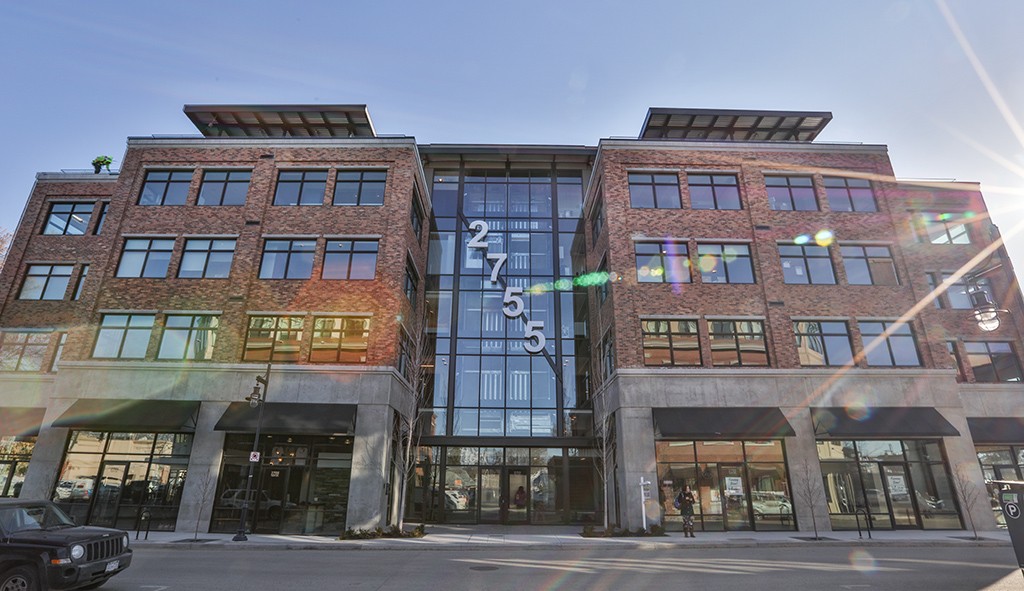
Address: Suite #412 - 2755 Tutt Street, Kelowna, BC V1Y 0G1
Phone: 778-484-7275
Website: kelownaoralsurgery.com
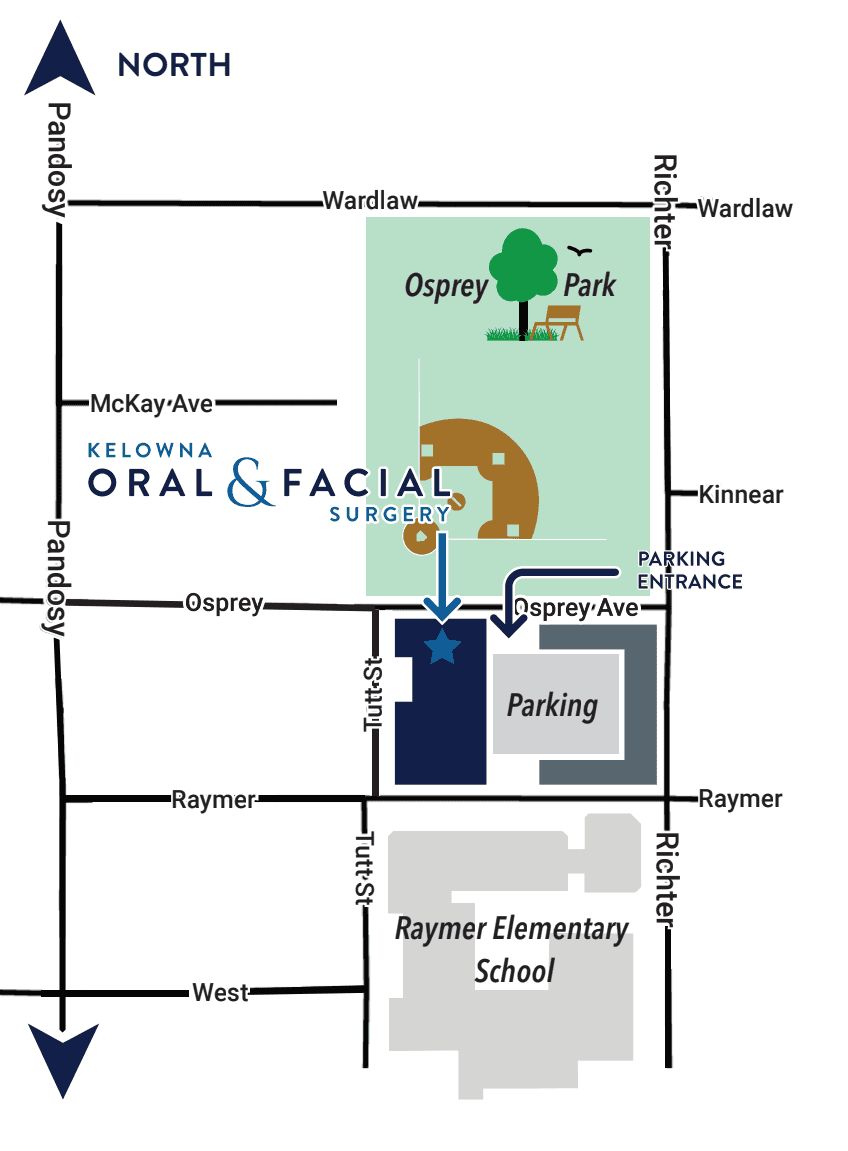
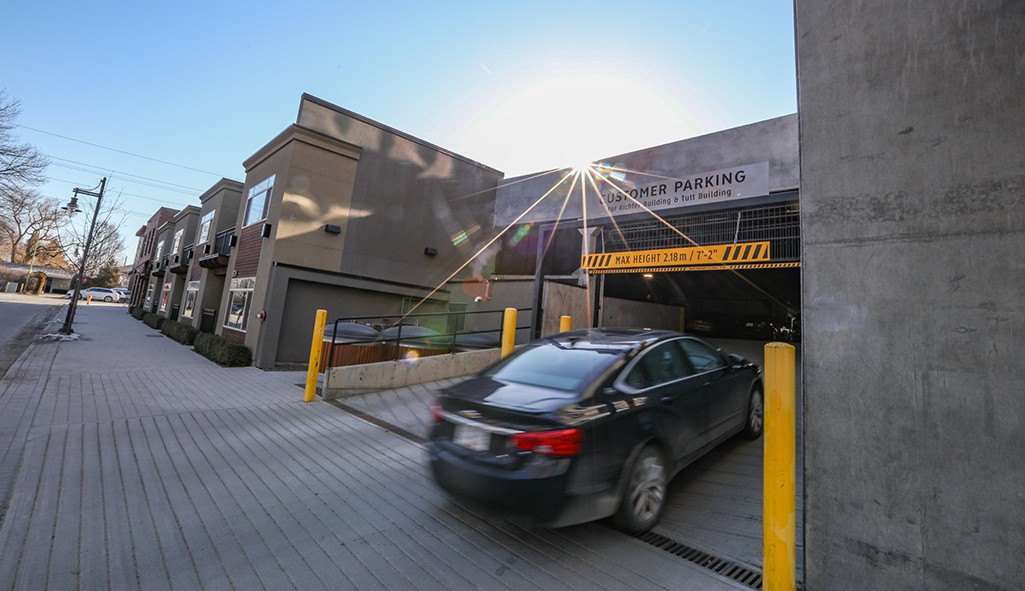
Parking: Attached parkade off Osprey Avenue (register license plate at reception)
Whether you require a single tooth replacement following an extraction or complex full-arch reconstruction paired with advanced sinus grafting, our clinical team provides a supportive, medically rigorous environment for your care.
7. Frequently Asked Questions
Can I get a dental implant and a bone graft at the same time?
Yes. In cases where the bone deficiency is mild to moderate, an experienced surgeon can often place the bone graft and the titanium implant post during a single surgical appointment. However, if bone loss is extensive, a "staged" approach is safer: the graft is placed first and allowed to mature for several months before implant installation.
How do I know if I need a bone graft before getting dental implants?
A 3D CBCT scan performed during your initial consultation is the definitive diagnostic tool. This scan measures the exact width, height, and spatial volume of your jawbone. If the bone is too narrow or compromised to fully enclose a standard-sized implant, grafting will be recommended to ensure long-term stability.
Is bone grafting surgery painful?
Bone grafting is performed under local anesthesia, IV sedation, or general anesthesia, ensuring complete comfort during the procedure. Post-operative discomfort is typically mild to moderate and easily managed with prescribed or over-the-counter pain medications, cold therapy, and a soft-food diet during the initial days of recovery.
How long does a bone graft take to heal before an implant can be placed?
Healing times vary based on the grafting material used and the extent of the defect. Minor socket grafts may heal in 3 to 4 months, whereas major ridge augmentations or complex sinus lifts typically require 6 to 9 months of healing to achieve the necessary load-bearing strength.
Other blogs
Dental Implants vs. Bone Grafting: Rebuilding Your Jaw Foundation in Kelowna

Anesthesia & Sedation Options at Kelowna Oral & Facial Surgery: What to Expect

Why 3D CBCT Imaging Is Essential for Safe Wisdom Teeth Removal in Kelowna

Fractured Teeth and the Importance of Dental Crowns

Dental X-Rays -> Types and why are they Important?

Periodontal Disease: Why Routfine Care Is Essential?

Transforming Your Smile and Oral Health
Contact Information
Leave Us a Message
Parking Instructions
The parkade is linked to our building and the entrance to the garage is on Osprey Avenue. Please bring your license plate number with you so we can register your vehicle upon arrival.
Contact Information
Leave Us a Message
Parking Instructions
The parkade is linked to our building and the entrance to the garage is on Osprey Avenue. Please bring your license plate number with you so we can register your vehicle upon arrival.
Contact Information
Leave Us a Message
Parking Instructions
The parkade is linked to our building and the entrance to the garage is on Osprey Avenue. Please bring your license plate number with you so we can register your vehicle upon arrival.

Copyright © 2026 Dr. Scott T. Martyna, DMD, MHA, FRCDC, FACS, & Dr. Gordon Wong, DMD, FRCDC, Dip ABOMS Certified Specialists in Oral & Maxillofacial Surgery. All rights reserved.
Kelowna Oral & Facial Surgery is locally owned and operated by Dr. Martyna and Dr. Wong Dental Inc.
Copyright © 2026 Dr. Scott T. Martyna, DMD, MHA, FRCDC, FACS, & Dr. Gordon Wong, DMD, FRCDC, Dip ABOMS Certified Specialists in Oral & Maxillofacial Surgery. All rights reserved.
Kelowna Oral & Facial Surgery is locally owned and operated by Dr. Martyna and Dr. Wong Dental Inc.
Copyright © 2026 Dr. Scott T. Martyna, DMD, MHA, FRCDC, FACS, & Dr. Gordon Wong, DMD, FRCDC, Dip ABOMS Certified Specialists in Oral & Maxillofacial Surgery. All rights reserved.
Kelowna Oral & Facial Surgery is locally owned and operated by Dr. Martyna and Dr. Wong Dental Inc.